
Google vs. Apple: Defending a Google Monopole on Web Searches with a High-Energy App Store
We will challenge the verdict. The platforms that give more choice and openness are the ones that are on the internet: in this case it’s the websites of the companies that make the phones. The trial made clear that we compete fiercely with Apple and its App Store, as well as app stores on Android devices and gaming consoles. We will continue to defend the Android business model and remain deeply committed to our users, partners, and the broader Android ecosystem.”
A lot has changed since you filed the original lawsuit over three years ago. For a bit there,
it seemed
like Epic had an interest in expanding outside of games with acquisitions like Houseparty and Bandcamp. What changed? Did the restrictions on app store play a part in that?
Gary Bornstein, lead attorney for the company, put it on November 28th that judge Donato wouldn’t grant the additional request for an anti-circumvention provision just to be sure that the company wasn’t reintroduced the same problems through some other creative solution.
We don’t want a special deal just for ourselves, and since they’re taking out all their potential competitors at once, we don’t want them to unify. We won’t be going along with something like that and doing a special deal for ourselves.
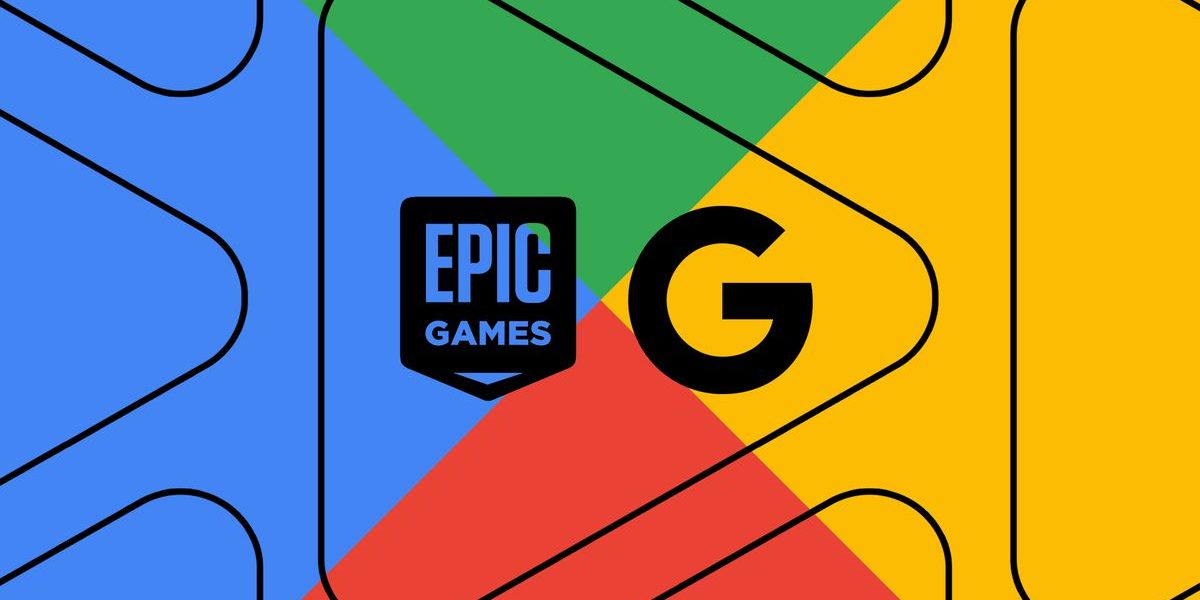
The ruling came in a case first filed in 2020 by Epic Games, known for its blockbuster game Fortnite and tools for developers, and argued before a jury since early November. The jury of nine—a 10th juror dropped out early in the trial—deliberated for three hours before reaching its verdict. They faced a number of questions ranging from defining product and geographic markets to anticompetitive conduct in those areas.
Google had denied any wrongdoing, saying that its sole aim was to provide a safe and attractive experience to users, especially as it faced competition from Apple, its iPhone, and its App Store.
A district judge is expected to rule on the legality of the search engine’s monopoly on web searches in the summer of 2024. Testimony in that case, which was brought by the US Department of Justice and attorneys general for nearly every US state and territory, concluded last month.
Google hasn’t said much about why it chose to have a jury rather than a judge decide its fate in the trial that concluded today, though it tried unsuccessfully to reverse course on the eve of jury selection.
Despite agreeing to settle with as many as 48,000 app developers, Google did not make major changes to its business practices. It also settled with a group of consumers and attorneys general for all 50 US states. Details of the latter settlement had not been published, pending the verdict in the Epic trial.
And when we tried to bundle Fortnite with other smartphone manufacturers like OnePlus and carriers of all sorts, they told us they couldn’t do a deal because Google had done a secret deal with them.
When Spotify uses Google’s own payment service, instead of paying the 30 percent that Google forces other developers to pay, they pay 4 percent. That should be the rate. Four percent is a perfectly reasonable rate for an unbundled payment system.
If instead of offering you a $147 million deal, Google said, “You can pay 0 percent to use your own payments system or 4 percent for Google Play billing,” would you be here today? Would you have fought this lawsuit to begin with if they’d simply offered something more fair to you?
That was our proposal to Google in 2019. If Google had said yes to that, that would have been awesome for all developers — the Android ecosystem would have become much, much stronger, and Google would be in a much better position in the smartphone industry than they are today. We would’ve never had a dispute because the problem would have been solved.
It’s always been in Google’s power to solve this problem. They make several billion dollars a year in unfairly earned profits from imposing this tax, which is nothing compared to the money they make from search. For all the other benefits they get from Android, Google could solve this problem today if they wanted to.
I don’t know about Supercell, but we know from the documents that Riot was thinking of distributing League of Legends directly to mobile phones, just as they do on PC. They planned to do that, until they got paid for not doing that. Riot was deterred from distributing out of the play by the payoff from the search engine.
They went around to 27 different developers and offered them a payoff if they did not work harder to get their games onto our store. Activision and Riot and Supercell had direct distribution plans that they were planning on; Google paid them not to pursue those plans. Just direct blatant violations of anti-competition law, it’s crazy a company of Google’s scale would do that.
Four years later, Microsoft acquired Activision Blizzard — and one of the big talking points from Microsoft to the European Union was that the merger strengthened the company overall in order to provide a viable computing store on iOS and Android.
The thing with Apple is all of their antitrust trickery is internal to the company. They force developers to have the same terms and they force carriers to have the same terms as well.
It’s interesting to me that because Google distributes the Android operating system as open source, they had to put all these deals out in the open. More out in the open, I should say — certainly they still wanted to
keep them secret
.
There is a lot of documentation from Apple and Google that shows they were similarly self-serving in terms of deals.
I’d say this is the thing that’s disappointed me the most with Apple and Google: even at the peak of the antitrust trial against Microsoft, Microsoft was awesome to developers. Microsoft has always been awesome to developers, always being respectful, giving developers a great deal and treating them as partners, you know? And so even as Microsoft was crushing corporate competitors, the developer experience was excellent. Netscape might feel different, according to this editor’s note.
And this has been our philosophy with Unreal Engine, for example, and the Epic Games Store. We just want to be a cool partner that helps other companies succeed the way we do. I think that philosophy changes. It might come with a change in management. I think the philosophy change would do both of those companies much good.
Is it possible for a game store and an app store to be put onAndroid by you, or is that only a game store? We look at Valve and we see a store that could be both, but they’ve decided to focus exclusively on games.
So the Epic Games Store isn’t a games store, right? It’s the store operated by Epic Games. We have a lot of non- games there. We have a number of software creation tools like Unreal Engine and the Brave web browser, and we are going to have more coming. We’ll host any app anybody wants of any sort.
I think the gaming market is something we’re uniquely close to, and so I think we would likely be able to forge closer partnerships and opportunities in gaming, but we’ll be open to everybody on Android as we are on PC.
Tim Sweeney on Epic’s victory royale over Google: Where does it come from? How did Google get its leaking of the emails to the press?
Google didn’t leak the email; they leaked their ridiculously biased summary of it to Abner Li at 9to5Google. Don Harrison testified at trial that he didn’t think Google leaked to the press. And then he was presented with a document including Google’s press team and Sameer Samat, head of all Android, basically summarizing the articles that appeared as a result of Google’s leaking of our plans to the press.
Oh, I think I read that one in court. I didn’t realize that was the same thing. It’s so far off from
what I heard
[about a “special billing exception”] that I didn’t recognize it being that. Does winning the verdict in this Google case help your appeal with the Apple case in any way?
There’s no linkage between the cases and law, so it would just come down to whether the court is in any way following current events on this topic. But there’s no legal connection between the two. The justices and support teams make the decisions regarding the appeal.
Source: Tim Sweeney on Epic’s victory royale over Google
How did you feel after hearing the jury’s verdict? A special day for developers and the Google v.s. Apple antitrust trial
You’d see long conversation threads would start to get into a spicy antitrust issue, and suddenly somebody points out the history’s on and the chat goes silent. They destroyed the documents when it was turned off. It was great to see that all called out in detail.
Some people would occasionally refer to me as a conspiracy theorist because I had suspected a bunch of the practices that Google had when we first started this. It was really, really interesting to see that my understandings of what Google was doing behind the scenes were actually true — you’re leaking our conversations to reporters to get negative stories written about us; you’re paying other developers off to convince them not to launch their own stores; they were going around and paying carriers and OEMs secretly not to carry competing stores.
Thank you for being here with us. It’s been a very engaging trial to watch. You and I have been there on every day of the trial. So my first question is why did you personally attend this trial every day save one — and what the heck happened on that one day?
A major antitrust trial is underway here, and it takes four weeks to complete, with lots of complicated facts and evidence. It wouldn’t be right to not show up and start something like this. So I had to do that. And, you know, Phil Schiller sat throughout the entire Epic v. Apple trial, as did I, so I think it’s just necessary to show respect for the legal process.
The trial has been in the works for four years. I look back at a September 2019 email
that was in discovery about a plan to draw Google into a legal battle over antitrust. Do you remember what it felt like to hear the jury’s verdict after four years?
This is a great day for all developers because we haven’t had a big antitrust verdict against Microsoft since the 1990s and that’s great, because it means change and benefits for everyone. Back in the early days of the internet. So this is an awesome thing and it’s much needed by the industry which is being strangled by a few gatekeepers imposing insane amounts of control and extracting huge taxes, which not only raise prices for consumers but also make a lot of kinds of products just unviable.
I know the significance, but… you were here in person. The smile on your face, the handshake, and the clapping on the back were all signs that you had a good day. How did you feel in that moment?
Well, it was a great relief. The conventional wisdom that attorneys tell you is that when there’s a rapid jury verdict, it’s typically not good for the plaintiffs making a complicated case, and so there was some trepidation going on — but it was awesome to see.
They got it, they found it quickly, and they were able to pull apart what had happened and contrast it with the story that was being told by Google.
Source: Tim Sweeney on Epic’s victory royale over Google
What do we have to say about Fortnite, the most recent US v. Microsoft antitrust trial, and what did we learn from it?
Yeah, I think it was almost a complete shutout. I think there was one cell missing from the entire board. I was so impressed by that bingo card, that I asked if I could lick the cookie. Do you remember? The 1999 US v. Microsoft antitrust trial is where you may not be old enough.
We’re not going to wait. We are going to start changing the world as quickly as we can. We not only have this verdict here in the United States, it is a worldwide verdict, right? We established a market worldwide, excluding China. So any remedies, we would presume, would be worldwide. We have cases coming up in Australia and the UK, as well as a European case.
There is a lot of litigation pushing in the direction of openness, as well as legislators and regulators. We are going to do everything we can.
Is there anything you can say to Match Group, who abandoned you at the last minute, that may be regretting it?
Yes, no. Match has been an awesome partner and a fellow member of the Coalition for App Fairness. I hope that they got what they needed out of their settlement. Very few companies have the resources that Epic has to fight multinational litigation against the world’s two most powerful companies. So there are absolutely no hard feelings, and we’re grateful that they joined the case because they did help in critical ways. Epic will continue to fight for all developers, seeking remedies, and… I don’t know if Sundar is going to be calling me, but if he does, all of our discussions will be directed toward solving the problem for everyone.
Let’s see. No… well, not directly, anyway. We have a really broad strategy of building games and technology. We’ve had huge success in recent years with the Unreal Engine gaining adoption among all kinds of industries even beyond games. We’ve also run into our own financial limitations. We expanded the company to nine times the size that we were before the beginning of the video game. And so we’re just trying to forge the strategy where we’re living within our means and doing everything we absolutely can.
[Editor’s note: Sweeney isn’t right about Fortnite having more concurrent users than Steam. Natalie Muoz said that Sweeney misinterpreted a story about howFortnite hit an estimated 7.6 million players at a time when the whole of steam had less than 10 million players. These days, Steam generally peaks at over 30 million, with valleys of 20 million. Fortnite’s valleys are closer to 3.8 million.]
If we only had a few more programmers. It’s the Linux problem. I love the Steam Deck hardware. Valve has done an amazing job there; I wish they would get to tens of millions of users, at which point it would actually make sense to support it.