
The impact of the budget cut to research-grant funding on international collaborations in the wake of Donald Trump’s re-ionization campaign
The president’s budget would reduce the number of people receiving support from 325,000 to about 91,000, in part by making grants more competitive, and would also result in a decrease in the success rate for applicants. Researchers were upset about their prospects on Bluesky. Dan was a scientist at the University of Memphis, and said that it wasn’t worth his time now. Mike Boylan Kolchin, a theoretical astrophysicist at the University of Texas at Austin, wrote: “One of the worst effects of having success rates this low: review panels & funding agencies will become extremely risk-averse.”
The president’s budget request will not be implemented unless it is approved by the US Congress. But policy watchers are worried that lawmakers might not stand up to Trump by rejecting many of his cuts, as they did during his first term as president.
The vast majority of the $5-billion cut would be to research-grant funding, although certain disciplines would be hit harder than others: the geosciences directorate faces a 44.6% cut; the education directorate would be reduced by 75%; and the maths and physics directorate would decline by 66.8%. Of the cutback, these three account for more than $2 billion.
Even the Trump administration’s stated priorities, such as artificial intelligence and quantum information science, would take a hit: they would see increases of 3.1% and 0.4%, respectively, but that is not enough to keep pace with inflation.
One of LIGO’s detectors will close if a request is made by Trump. The budget request doesn’t provide a reason. Losing one of its two detectors would be “devastating”, says astrophysicist David Reitze, executive director of LIGO at the California Institute of Technology in Pasadena. The programme would lose most of its ability to locate events since it would be more susceptible to noise produced by earthquakes, which it might misclassify as events it does not detect.
The future of several international collaborations is in jeopardy because of the proposed cut to US science funding by US President Donald Trump.
The agency is in discussions with NASA and will discuss potential action and alternative scenarios with its member states at a meeting on June 11 and 12.
According to a planetary scientist from the University ofLeicester in the UK, they can only hope that the proposed budget cuts never come to pass. “But either way, it may take time to recover from the erosion of trust between agencies after these proposals.”
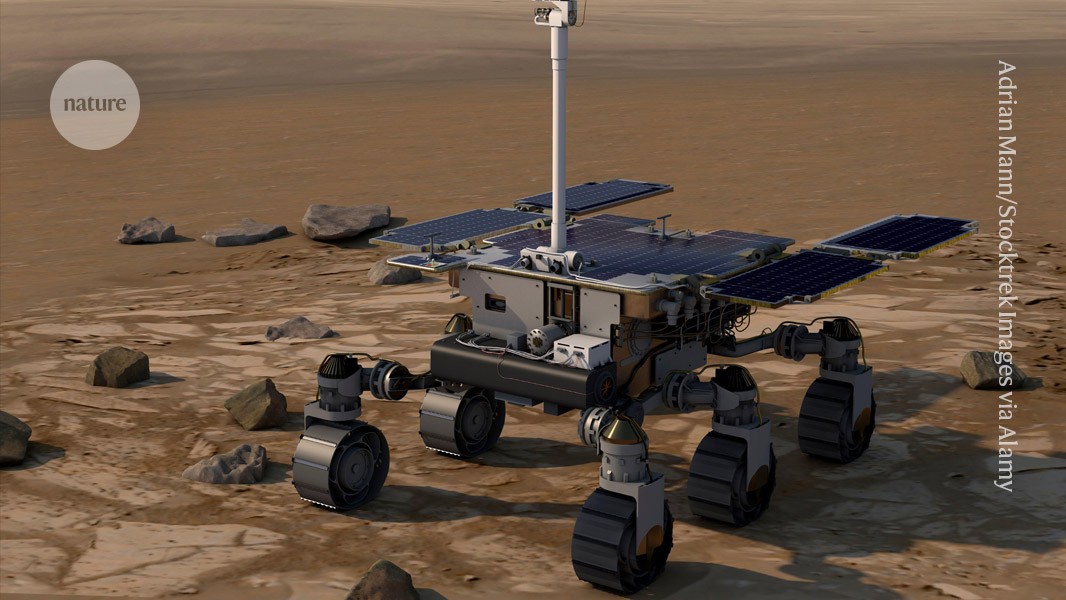
NASA agreed to give launch and landing gear for the Rosalind Franklin rover after the European Space Agency decided to cut relations with the Russian space agency over their involvement in the conflict in Ukraine. The aim is to find ancient life on the red planet.